
Marlboro County Arrest Records and Charges
Arrest records in Marlboro County begin on the law-enforcement side. They may reflect the agency, arrest date, booking, custody status, bond processing, and basic identifying information. Court charge records begin when a charge is filed or tracked by a court. A single arrest can produce no formal charge, one charge, or several separate charges. Some charges begin in Magistrate or Bond Court and later move to General Sessions if indicted or transferred.
A court charge record is narrower than the full criminal case file. It can identify the offense description, statute or CDR code, charge level, warrant or citation number, bond, court agency, and disposition. Booking details and local custody questions belong with the Marlboro County Detention Center or Sheriff's Office, while filed charges and court events belong in the court index and clerk channels. For custody detail, use the Marlboro County inmate records page. For the full criminal case and outcome, use the criminal case file.
The South Carolina Judicial Branch Magistrate Court page is a key source because Marlboro Magistrate and Bond Court handle bail, preliminary hearings, lower-level criminal matters, and arrest or search warrants.
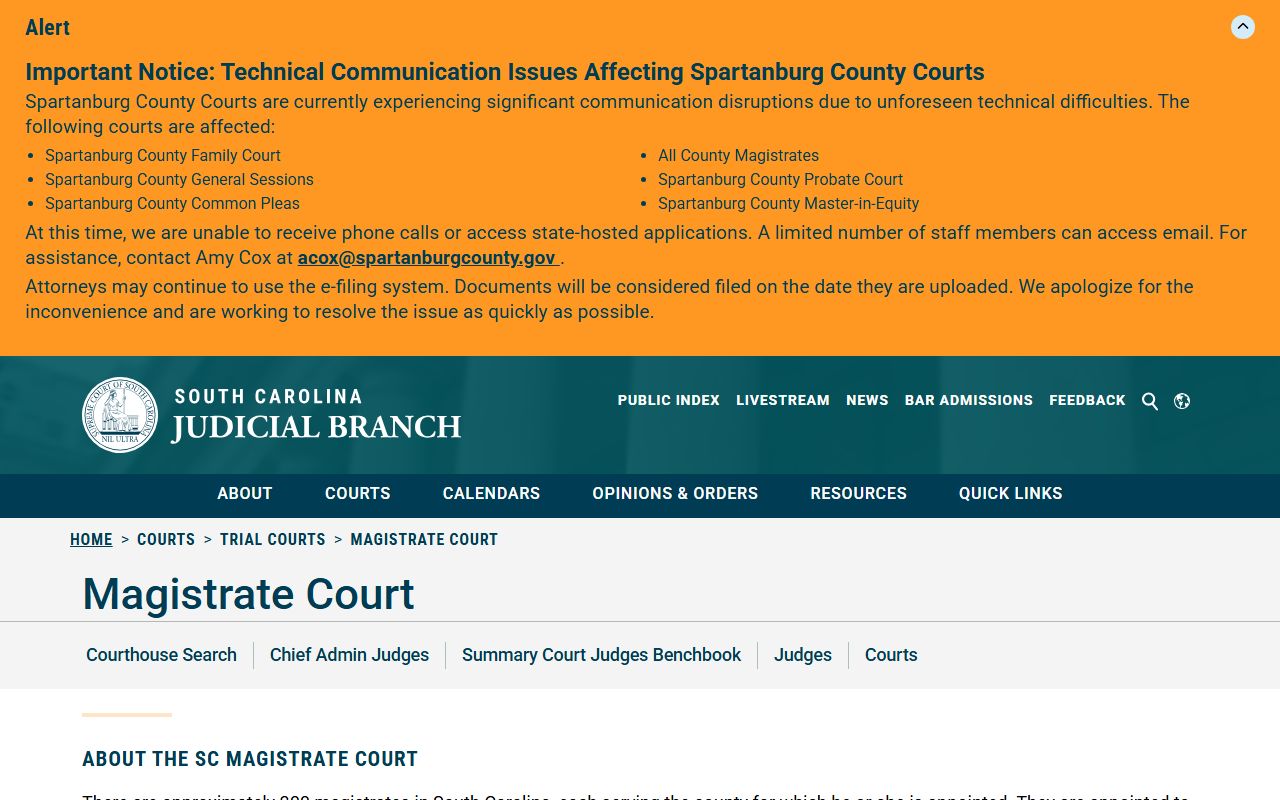
That Magistrate Court role explains why a new arrest may show first in bond or summary-court channels before a General Sessions case exists.
Court Charges After Arrest
The charging side should be read first when the goal is to understand what the State is pursuing in court. South Carolina prosecutors are called Solicitors. Marlboro County is served by the Fourth Circuit Solicitor's Office, which represents the State in criminal prosecutions for Chesterfield, Darlington, Dillon, and Marlboro counties. A police report or arrest notation may describe suspected conduct, but the formal court charge is what the court tracks for hearings, pleas, disposition, sentencing, and expungement eligibility.
Charges may be filed through a complaint, an information, or an indictment, depending on the court and stage. General Sessions records may include charges after indictment or transfer, defendant and Solicitor information, bond papers when filed, pleas, dispositions, sentencing sheets, orders, bench warrants, and docket activity. Law-enforcement investigative files and unfiled discovery are separate and may not be public.
| Document | Who Uses It | How It Fits Marlboro County Charges |
|---|---|---|
| Complaint | Officer, prosecutor, or charging party depending on context | Often starts a lower-court or early criminal charge before later court action. |
| Information | Prosecutor | A prosecutor-filed charge document used in some criminal contexts instead of indictment. |
| Indictment | Grand jury | A formal charge returned in General Sessions felony or higher criminal cases. |
Note: A charging document is an accusation, not a finding that the person committed the offense.
Search Marlboro County Charge Records
The main court-search path is the Marlboro County Public Index. It is the official online access path for Circuit and Magistrate case records where public docket data is available. Search by defendant name when the case number is not known, then open matching records and read the charge list, court agency, docket entries, bond activity, and disposition fields. If the matter is a city ticket or municipal charge, check whether the city court or payment channel is the correct route.
- Open the Marlboro County Public Index and choose the court agency if known.
- Search by case number for the most exact match, or by last name and first name.
- Review the court agency, case type, filing date, party names, and docket entries.
- Read each charge separately because one arrest may lead to multiple charge lines.
- Call the Clerk of Court, Magistrate or Bond Court, or municipal court if the online entry is incomplete.
Public Index notices state that cookies and JavaScript must be enabled and that some browsers may need a pop-up exception to view case detail. Beginning January 1, 2026, home address information is no longer displayed on Public Index sites. That address change does not mean a case is sealed.
Marlboro County Charge Fields
A charge entry should be read field by field. The offense title alone may not show the court level, bond status, or final result. A charge can be amended, reduced, dismissed, nolle prossed, or resolved by plea or trial, and the docket may show the timing of those changes.
| Field | What It Shows |
|---|---|
| Case number | The court identifier used to locate the charge and docket. |
| Court agency | General Sessions, Magistrate, Bond Court, Municipal Court, or other listed court agency. |
| Defendant | The person accused in the filed charge. |
| Charge or offense | The offense title, statute or CDR code, and sometimes the charge level. |
| Warrant or citation number | The related warrant, citation, or charging identifier when public. |
| Bond | Bond amount, condition, or related bond docket entry when filed. |
| Docket entries | Hearings, pleas, continuances, bench warrants, orders, sentencing, or disposition events. |
| Disposition | The outcome for that charge, not necessarily the outcome for every charge from the arrest. |
Marlboro County Charge Status
Status terms explain what has happened to a charge so far. They are not all the same. Pending means the charge remains open. Dismissed means the charge was ended by the court or prosecution, with future effect depending on the circumstances. Nolle prosequi, often shown as nolle prossed, is the prosecutor's decision not to proceed on a charge. Disposed or closed means the court has recorded an outcome, but the outcome must still be read.
| Status | Meaning | Practical Reading |
|---|---|---|
| Pending | The charge is still active in court. | Check the next hearing, bond terms, and recent docket entries. |
| Amended or reduced | The charge changed after filing. | Compare the original charge to the current charge before citing the record. |
| Dismissed | The charge was ended by court or prosecution action. | Look for whether it was with prejudice, without prejudice, or tied to another plea. |
| Nolle prosequi | The Solicitor chose not to proceed. | It may support expungement review, but eligibility is statute-specific. |
| Guilty or conviction | The charge ended in a finding or plea of guilt. | Read the sentence, fine, probation, or restitution entries. |
Charge vs Conviction
Being charged is not the same as being convicted. A charge is an accusation filed into a court process. A conviction is a final guilt result after plea, verdict, or other adjudication. This distinction matters for employment checks, expungement questions, and public understanding of an arrest record.
| Point | Charge | Conviction |
|---|---|---|
| Stage | Starts or continues the criminal court process. | Comes after a guilty plea, verdict, or adjudication. |
| Proof level | Based on probable cause or formal accusation. | Requires a final guilt finding in court. |
| Record effect | May remain visible unless dismissed, sealed, expunged, or otherwise restricted. | May carry sentence, fine, probation, or other legal result. |
| How to verify | Read charge lines and docket entries. | Read disposition and sentence fields. |
For the full case sequence, including pleas, motions, trial events, disposition, and sentence, use the Marlboro County criminal court records page.
Bond Court and Warrants
Bond and warrant entries often sit close to arrest and charge records. Magistrates set bail and conduct preliminary hearings. Public Index docket entries can include bond papers when filed, bench warrants, continuances, pleas, dispositions, and sentencing. A bench warrant may be tied to failure to appear, failure to comply, contempt, or failure to pay, but it should be confirmed with the issuing court before action.
The South Carolina Judicial Branch Traffic Ticket Search matters because some lower-court charge records begin as summary-court traffic or municipal cases.
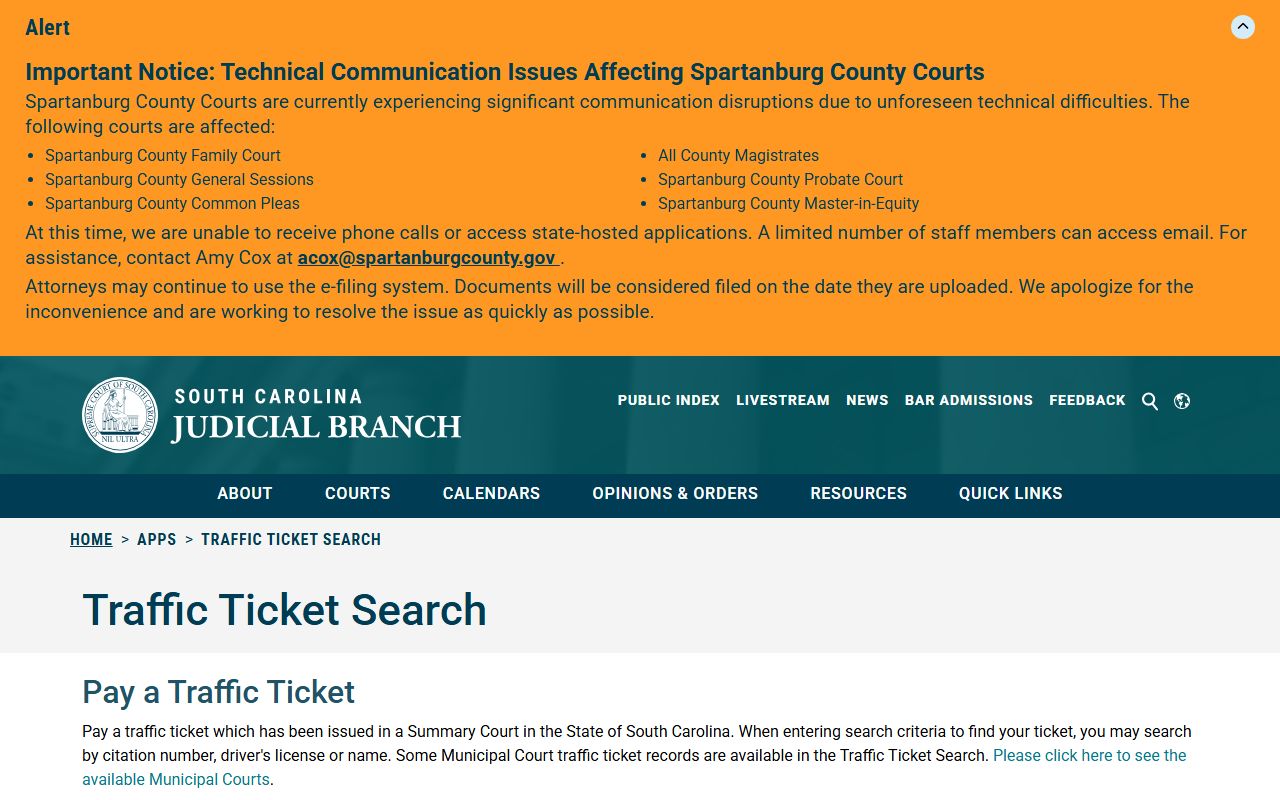
A traffic or summary-court charge should be kept separate from a General Sessions criminal charge unless the docket shows transfer, indictment, or appeal.
Marlboro County Charge History Checks
SLED CATCH is the official statewide name-based criminal-history channel for South Carolina arrests and convictions submitted by state and local agencies. It is not a live warrant search and should not replace the court record when the question is a Marlboro County charge status. The research notes a $25 nonrefundable online request fee plus a $1 online convenience fee, with a reduced $8 fee for qualifying charitable organizations and no online convenience fee for mail-in requests.
Driver records are different from criminal charge records. The SCDMV driver-record page is useful for license points and driving-record products, not for proving every court charge after an arrest.
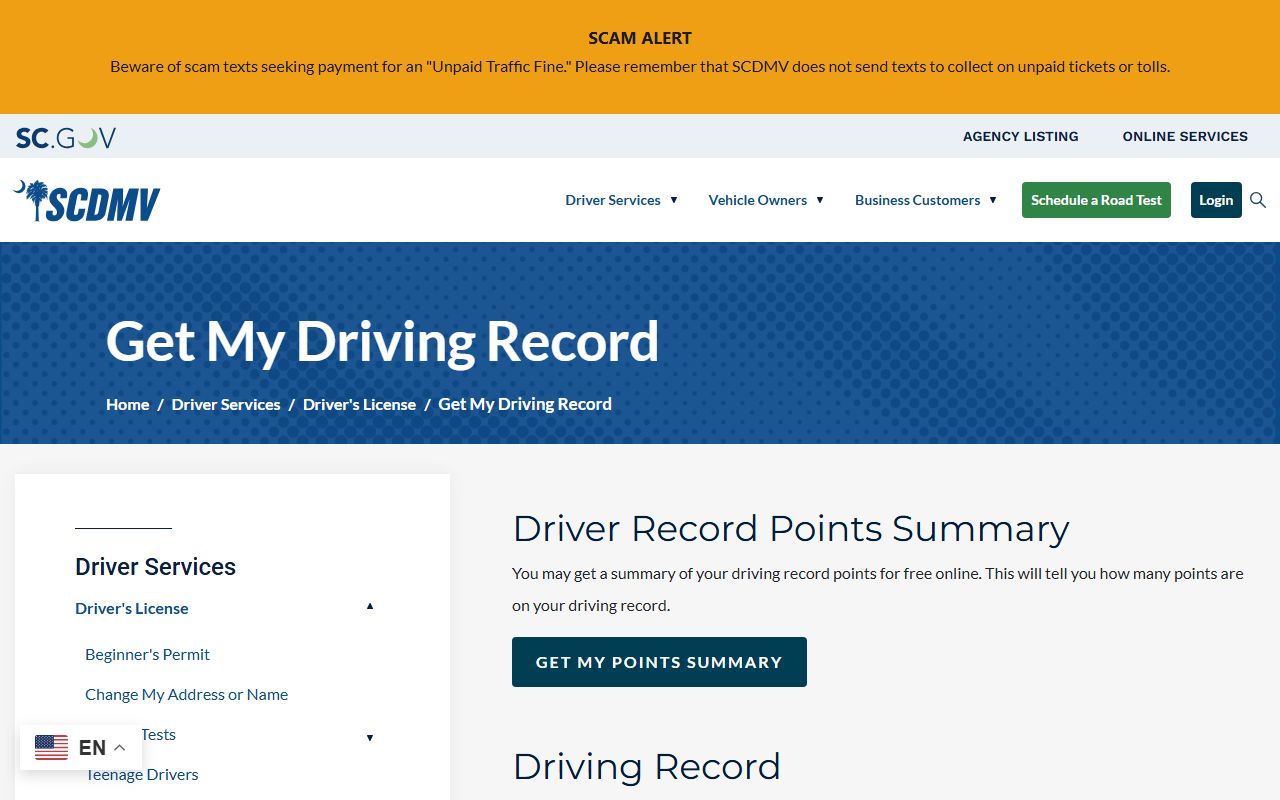
This distinction matters when a charge involves traffic conduct because the court case and the driver's license record are maintained through different systems.
Restricted Marlboro County Charge Records
Not every arrest, charge, or court event is public. Juvenile court records are confidential under South Carolina law and are not a public adult criminal lookup. Adoption records, mental-health proceedings, sealed filings, expunged charges, protected identifiers, and some law-enforcement materials may be withheld or redacted. South Carolina's Public Index address-display change also means a public docket may remain visible even when home-address information is suppressed.
| Record Type | Public Effect | Where to Ask |
|---|---|---|
| Juvenile charge | Generally confidential and not a public adult record search. | Family Court or counsel. |
| Sealed charge | Hidden from public view while still existing for authorized access. | Clerk of Court or issuing court. |
| Expunged charge | Removed, sealed, or destroyed from public criminal-history access as ordered. | Fourth Circuit Solicitor and Clerk. |
| Active investigation | May be exempt or delayed under public-record rules. | Law-enforcement agency. |
South Carolina's expungement process can cover certain not-guilty, dismissed, or nolle prossed summary-court charges, subject to exceptions. General Sessions and juvenile expungement questions route through the Solicitor in the circuit where the charge originated.
Other Court Charge Sources
Some assigned image sources are broader than criminal charge lookup, but they help show the court structure that prevents record confusion. Probate Court handles estates, marriage, guardianships, conservatorships, trusts, commitments, and other probate matters. It is not the place to search arrest records, but it is part of the same county court ecosystem and appears in site navigation when users are sorting record types.
The South Carolina Judicial Branch Probate Court page identifies the probate jurisdiction that should be kept separate from criminal charge records.
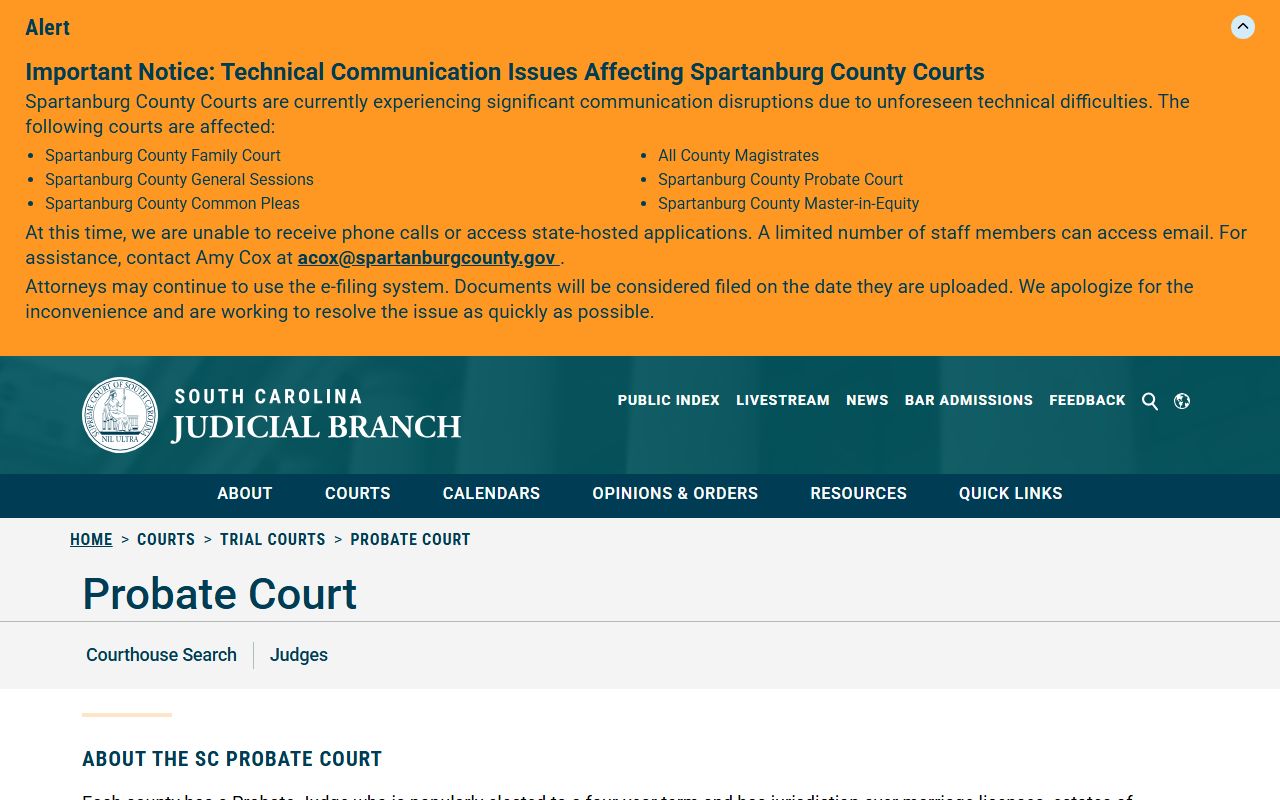
Keeping Probate Court separate from charge records helps avoid routing criminal or arrest questions to the wrong office.
The SC appellate C-Track public access page is also separate from Marlboro County trial-court charges.
Appeals can follow a trial-court case, but a first search for charges after arrest belongs in Marlboro County trial-court and local court channels.